  ® ®
|
Fuel hose |
|
One area where mechanical knowledge and experience is most apparent is in the choice of rubber hose between your carburetors and the tank's fuel valve ("petcock"). There are many options, and because there are, many ways to choose wrong.
|
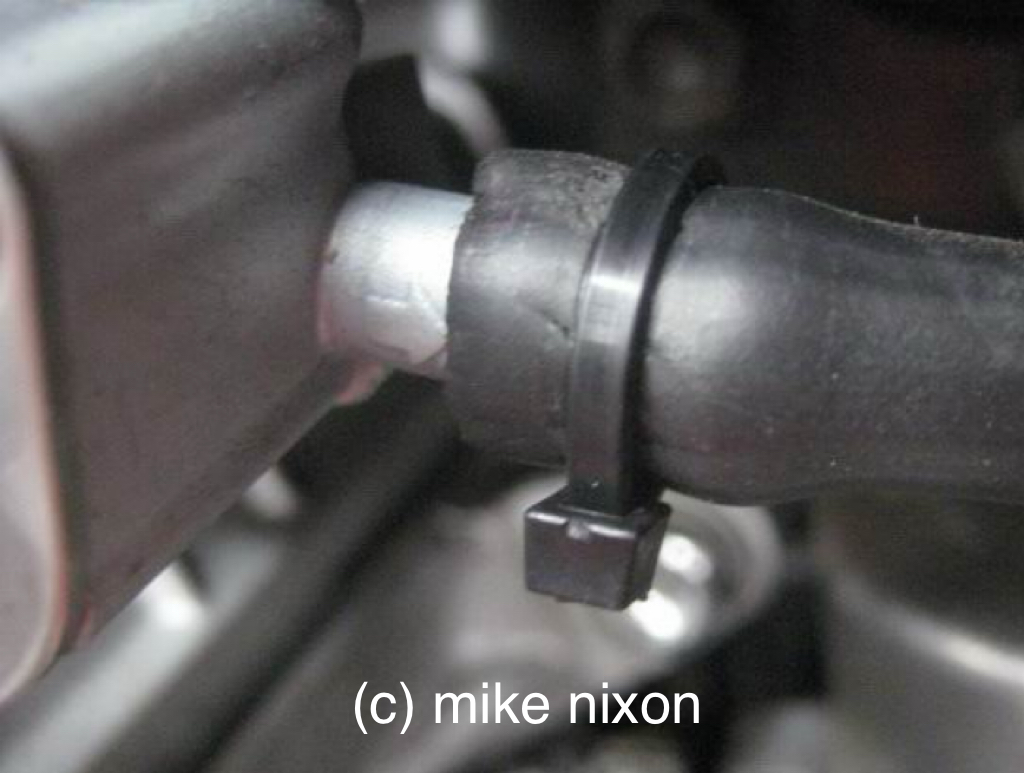
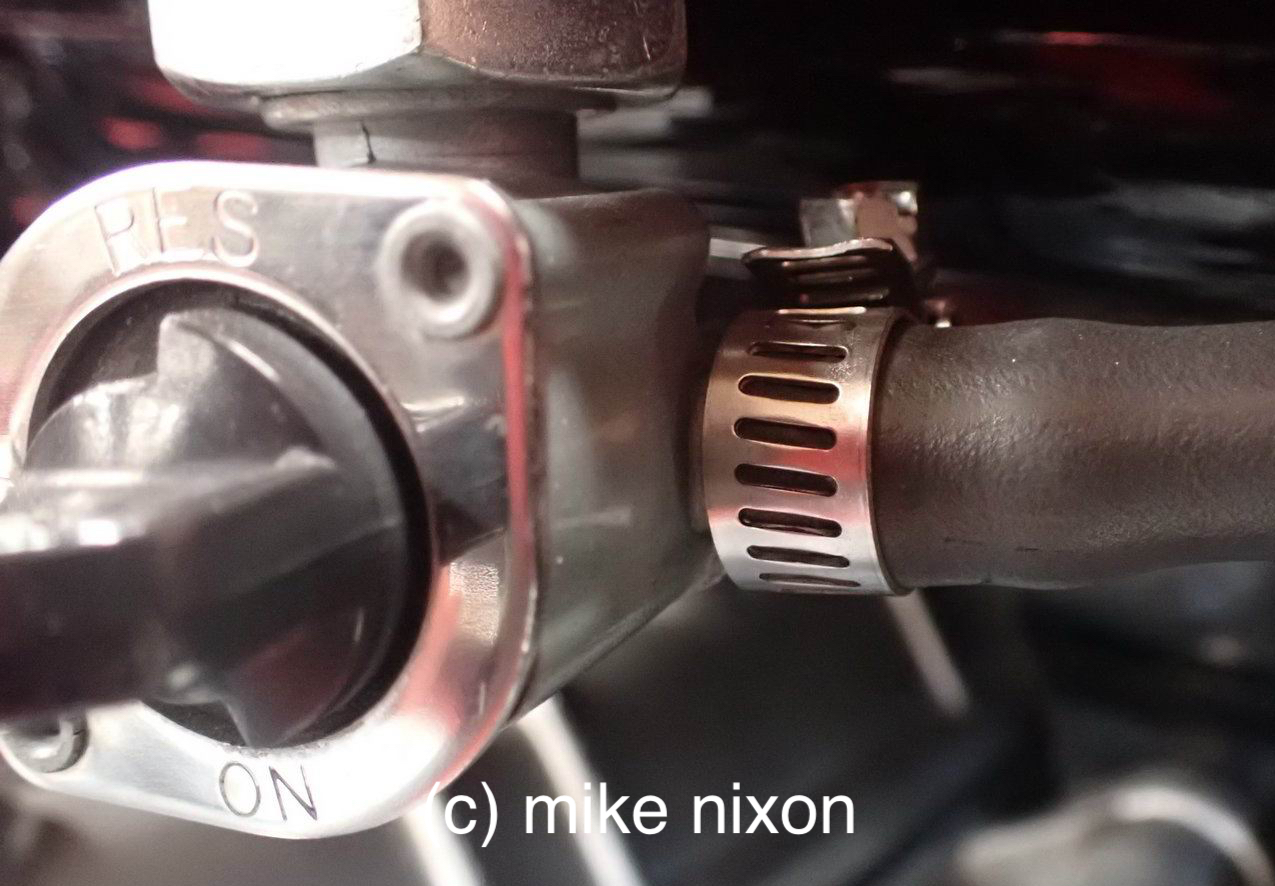 Let's start with the hose clamp. First, vintage Hondas used a very lightweight clamp that is simply the traditional spring clip. Its clamping action is light because Honda wisely depended more on the proper fit of the hose than on the clamp. In fact, seeing any kind of comparatively automotive oriented clamp on a fuel line tells me the hose is inferior. If the hose is correct, a mongo clamp is unnecessary. The factory clip works well in that case. And hardware store type worm drive hose clamps? Anathema! Not only are they butt-ugly (they're fine under a car's hood), they encourage over-tightening that damages the hose. And as for cable ("zip") ties, realize that these were never designed to be clamps. Racers get by with using them, but the plastic they are made from embrittles with age and therefore makes them unsafe for holding fluids. I shudder whenever I see them on fuel hose and I have seen them a lot.
 Now the hose itself. Do not shop for hose at a hardware store. The ubiquitous fiber reinforced stuff is even worse than worm drive hose clamps, and will in most cases require those clamps because it rarely fits properly. In addition, that hose swells, and even worse, it chunks. A lot of carburetor debris issues can be traced to it. And the clear, see-through hose? No! Veteran mechanics know how quickly that stuff hardens, leading inevitably to leaks. So historically, classically awful is the stuff just seeing it makes me cringe. And don't be fooled by the name, "tygon". It's just this same, fast-hardening, plastic hose, even in its new black version. And again, you know what kind of hose clamp will be necessary with it. Stay away from that crap.
|
I don't generally fit new fuel hose to the carburetors I rebuild. Honda's own hose fits properly. But ninety percent of the other hose does not. In addition, Honda often annoyingly puts differently-sized fuel fittings on a given carburetor/petcock combination, so one end of the hose has to fit one size while the opposite end is forced to stretch to a larger size. And quality fuel hose that can fit properly on two different fuel fittings is not real common. The situation is much worse when a Pingel petcock is involved, because all of them are designed for Harley-Davidsons and therefore have unaccommodatingly large nipples. Just a fact. And, there just aren't any good alternatives to factory Honda hose. Everything out there, even the Geman-made Continental brand cloth outer braided stuff, is poor quality. I won't use it. Even the well-known Motion Pro is the same as most offerings: ozone-vulnerable, quickly-hardening, thin-walled (kink prone and loosely fitting) Tygon (i.e., plastic), and the Continental hose, well, underneath the fancy braiding is actually very low-grade almost natural rubber, the poorest hose material choice on the planet. I have found it is best to let the customer make his own fuel hose arrangement. If I try to anticipate things, all I am doing is wasting product because fitment, lengths and curve radii and inline filter choices are all variables out of my control.
|
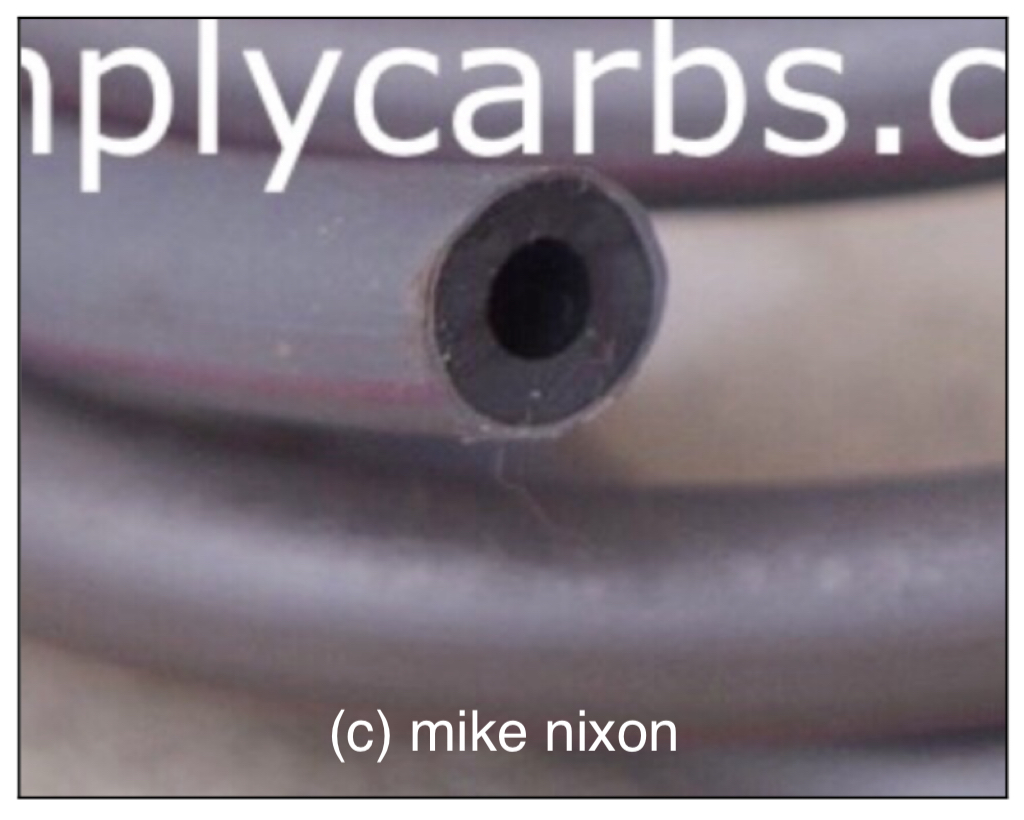
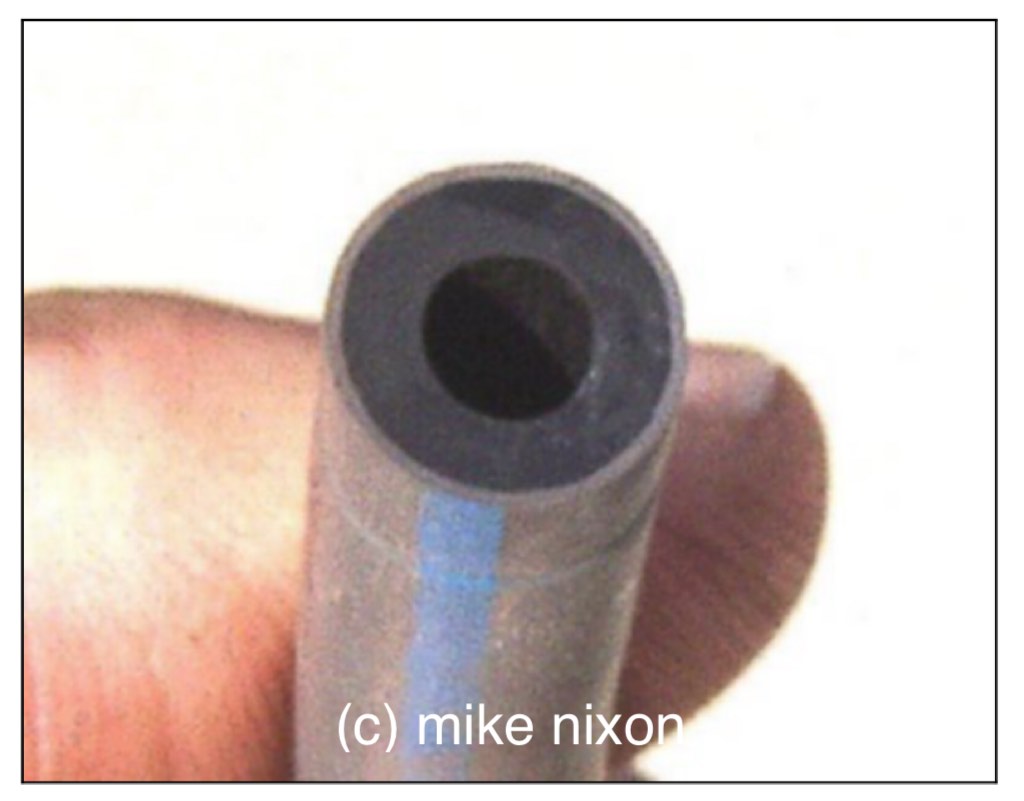 In the 1970s Honda used and sold a dual-layer fuel hose. The outer layer was an ozone-resistant rubber called hypalon--the same material Honda's spark plug wires were covered with--the inner another, fuel resistant synthetic rubber, possibly neoprene or viton. This was the very best that could be obtained for a long time, and it was in fact superior to everything else out there. Kawasaki also used it, the difference being theirs had a blue stripe down its length while Honda's had a red stripe. Honda quit using and selling their famous red stripe hose going into the mid-1980s, but for a while aftermarket suppliers K&L and Sudco provided the equivalent blue stripe version. Unfortunately, they too quit eventually and now this superior hose is extinct. The factory Honda hose that is available from Honda today is not this dual layer but fair hose nonetheless and probably the best we can get now. It's still better than most any other hose, it's just not the superlative stuff of the 70s. It's too bad. The dual layer hose was extremely long-lasting and very high quality. So much so that when I encounter it on carburetors I am rebuilding, I make every effort to retain it despite it exhibiting various degrees of hardening after 40 to 50 years.
|
Last updated March 2026 Email me www.motorcycleproject.com My bio © 1996-2026 Mike Nixon |