|
Following is a description of just three things people do to carburetors they should not do. These things are very common. Don't let your carburetor rebuilder do them, and don't you do them.
Stroking throttles
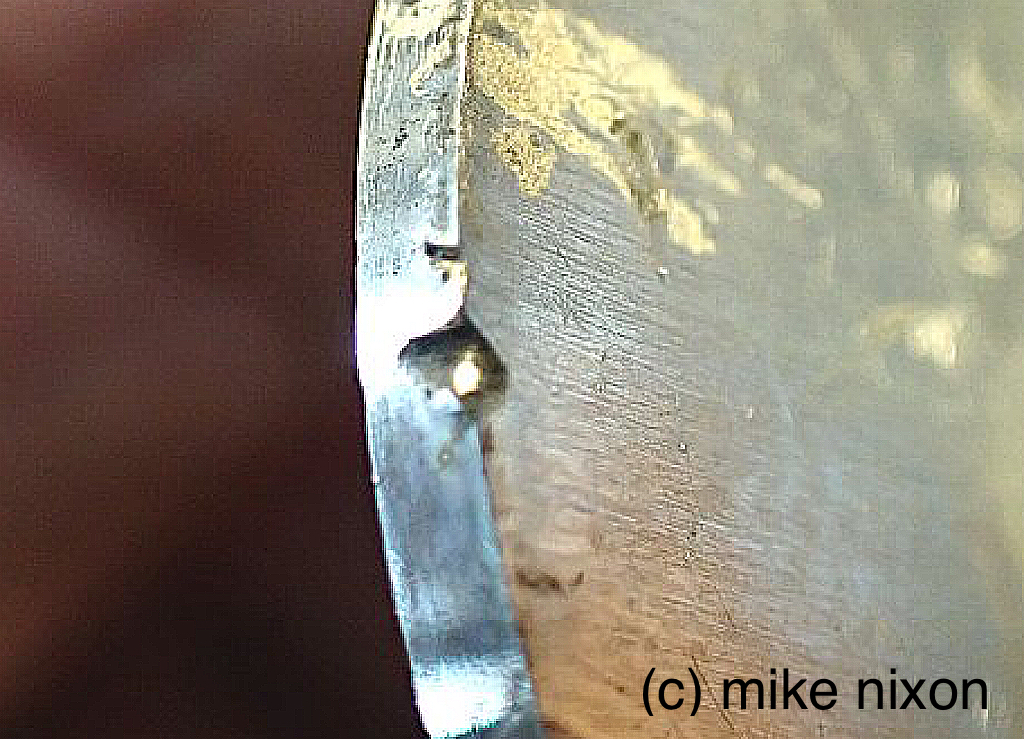
If you look closely at the throttle plate of a Honda CV carburetor you'll notice the plate's edge is not machined at 90 degrees, it is at an oblique angle; it is nearly a knife edge. This angle accomodates the angle that the plate is itself mounted in the carburetor, so that the edge of the throttle plate seals perfectly against the carburetor body. And, the throttle plate is either brass or even softer aluminum. Dragging anything under this exquisitely-machined yet very soft surface is a really bad idea. Whether wire, or a plastic tie, drill bit, whatever, the throttle plate is not going to survive this nonsense without damage. The resulting groove scratched into the edge of the throttle plate will pass more air than the plate's position will call for, throwing off everything--synchronization, idle speed, the works. Don't do it.
Burnishing float valve seats
A lot of advice on the 'net instructs to use an abrasive to "clean" float valve seats. I cringe every time I see it. The main problem is this has the real potential of changing the shape of the carefully machined taper in the seat. That's bad enough, as the seats in many Honda carburetors are not replaceable and thus the carburetor body itself is ruined. How long is it going to be I wonder before folks stop doing this? And why haven't people figured out on their own how bad a practice this is?
Using pliers on float pivot pins
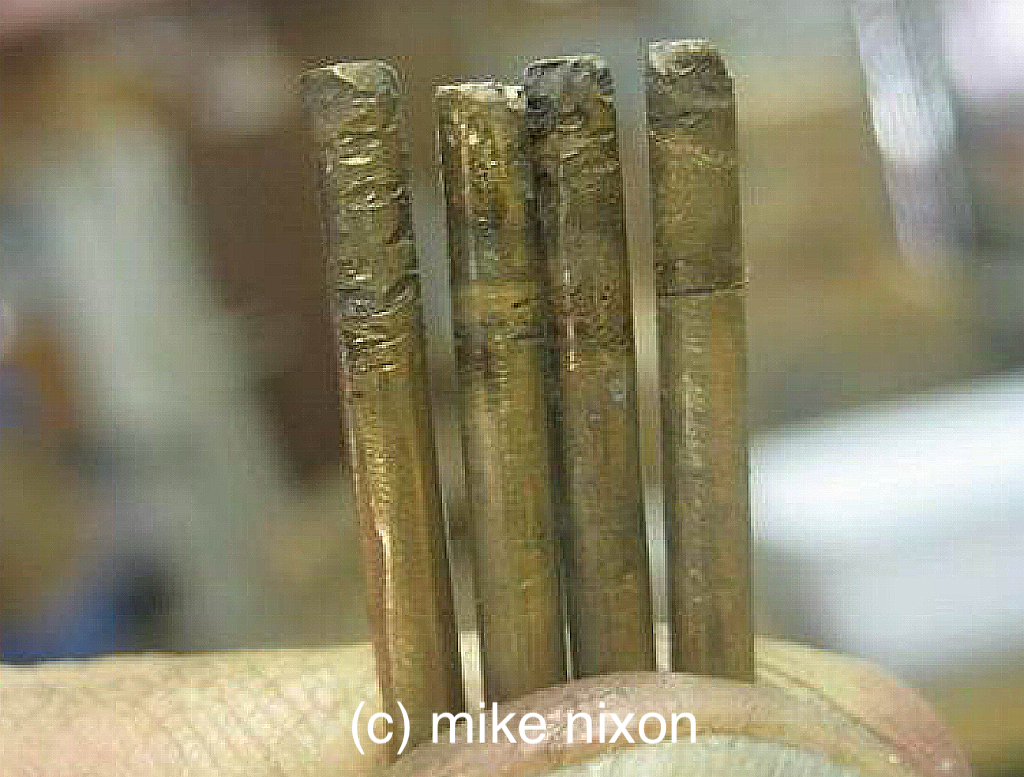
Broken float pivot stantions or posts are a fairly common finding on certain models of vintage Honda carburetors, when the previous mechanic has not been careful. Plainly, there are several reasons these posts may break. But the knowledgeable rebuilder takes pains to avoid it. One of these techniques is to run the carb body and float and pivot pin all together in the ultrasonic to loosen up the pin. I often find that this is necessary. These posts can also break when the pivot pin is not removed correctly, that is, with a properly fitting drift, not a pair of pliers. The use of pliers puts divits on the pin that make it seize in the posts, resulting in breakage of the posts during installation or more commonly, during a later removal.
|

 ®
®