  ® ®
|
Carburetors Part 23: The Mikuni RS racing carburetor A thirty-five-part carburetor series |
|
The Laverda solution |
|
|
|
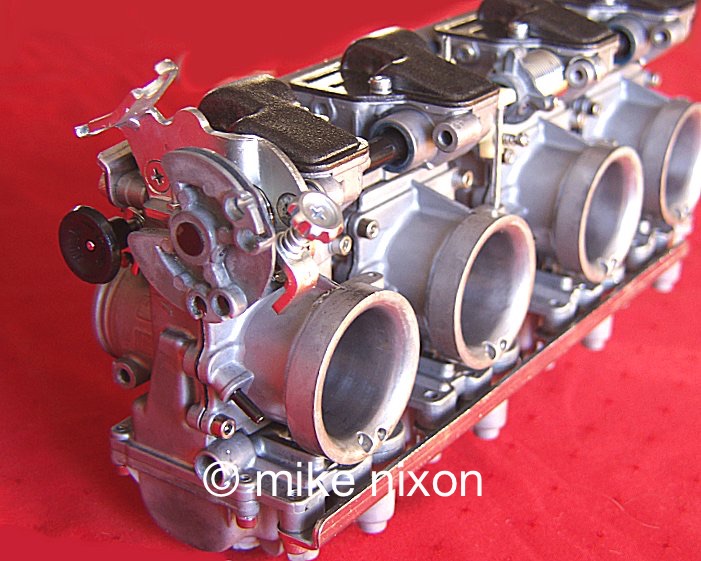
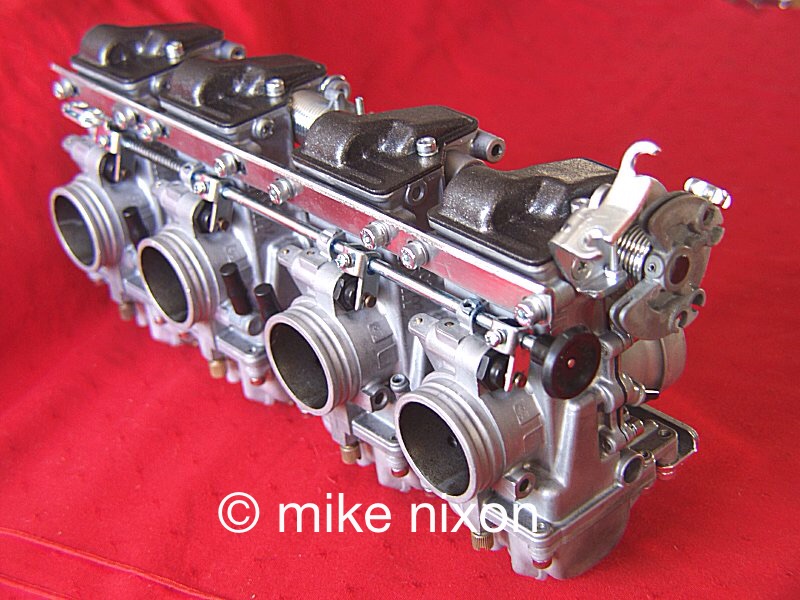
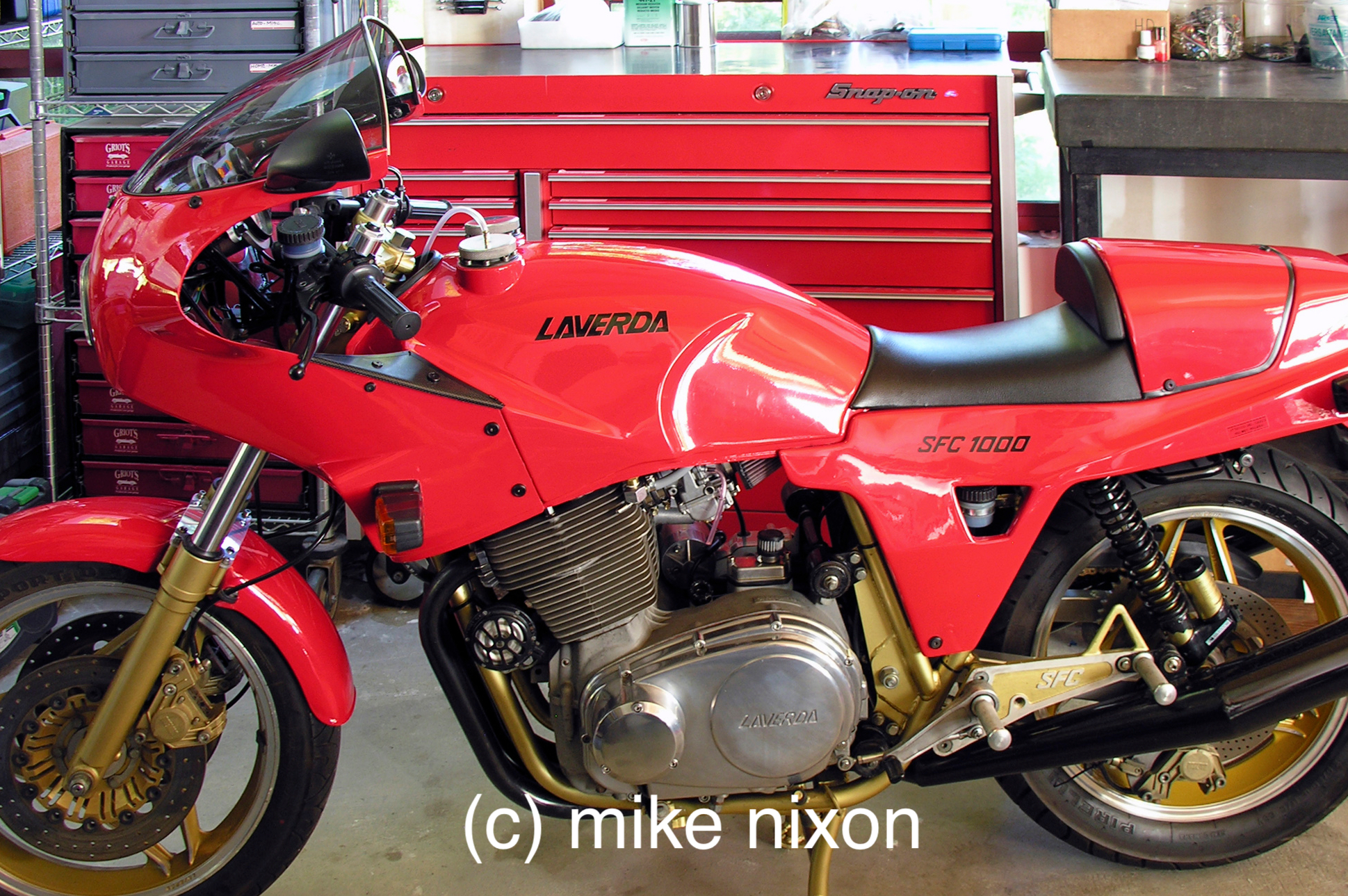
Beautiful carburetors. And they have the reputation for working as good as they look. Very tunable, very good performers. The customer was very happy. |
|
|
|
|
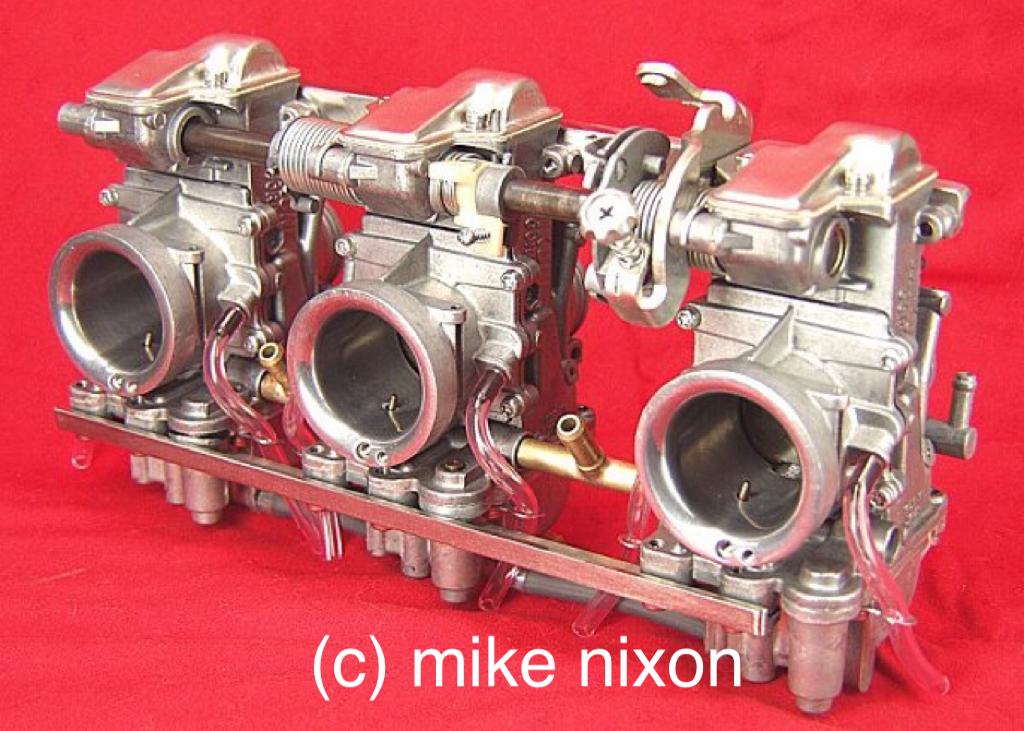
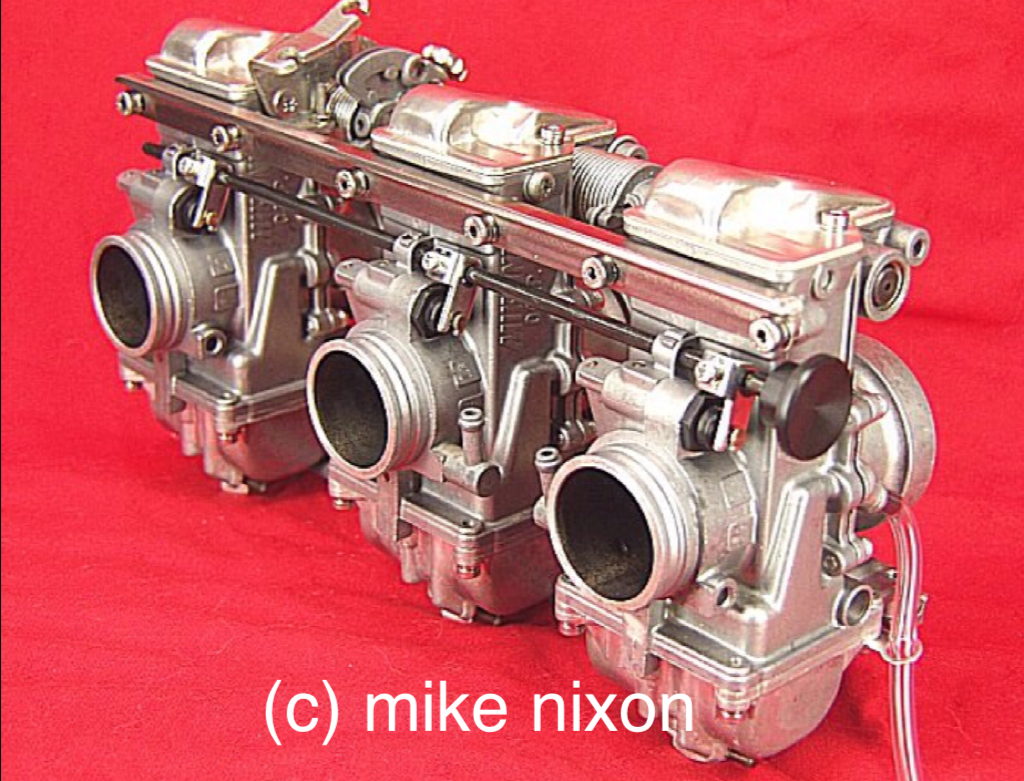
A brace of RS34s reracked and set up for the Laverda triple. Everything but the Mikuni bodies and throttle bellcrank is custom-made, including the stainless steel steadies, fuel tees, throttle shafts, choke shaft, choke knob, etc. |
This customer insisted on stainless steel socket head screws and I gladly accommodated him though with my usual reservation. Note the zinc-plated tops, the black oxided throttle and choke shafts, and the factory-like overflow hoses. |
|
Adaptability
Less sophisticated than Keihin |
|
Look-alikes
Many people have made the mistake of assuming the GSX-R carbs to be more or less like the RS carbs. They find out soon enough they are very different and that difference is mostly in the difference in the adaptability to different engines. The Suzuki carbs have proved to not be very adaptable.
For more on the VB carburetor specifically, check out my VB carb series.
|
|
|
|
|
|
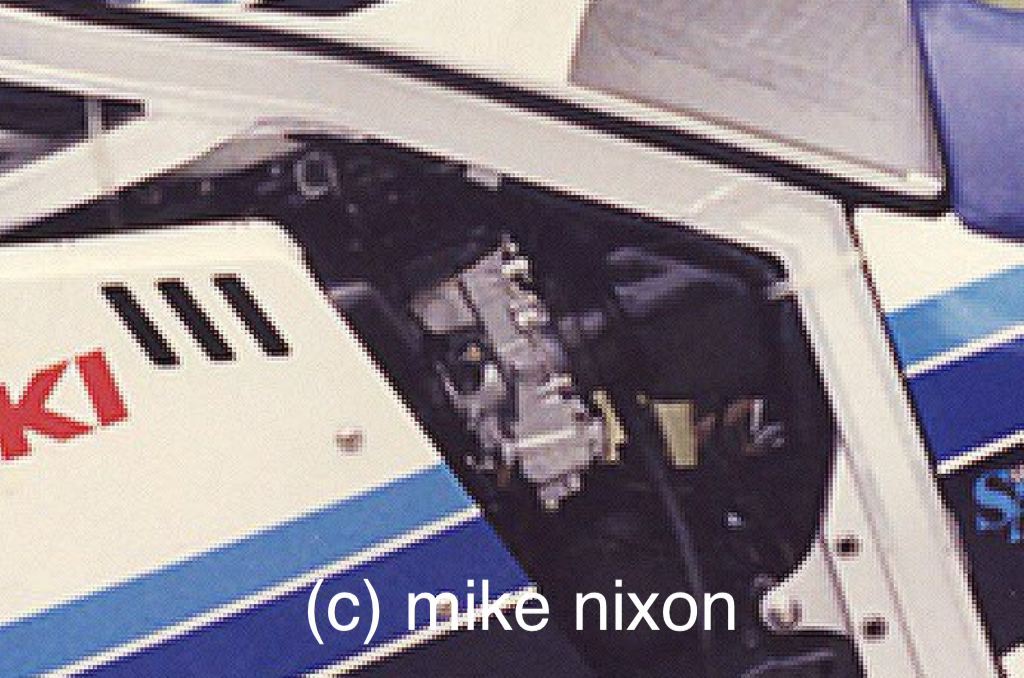
The 1985 GSX-R750. This was a non-US model. It emerged in 1986 stateside with CV carbs. The CVs too are very good carburetors, in the industry known as "slingshot" carbs. |
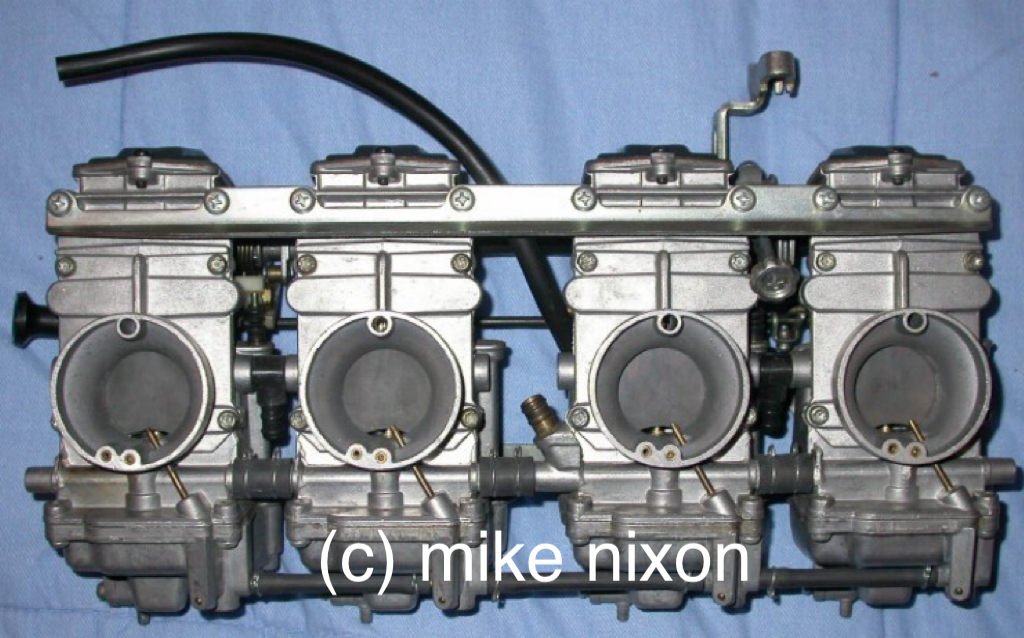
The world spec bike had fully mechanical carbs, with real flat slides. For a while, these carbs were enthusiastically sought after. Not any more. |
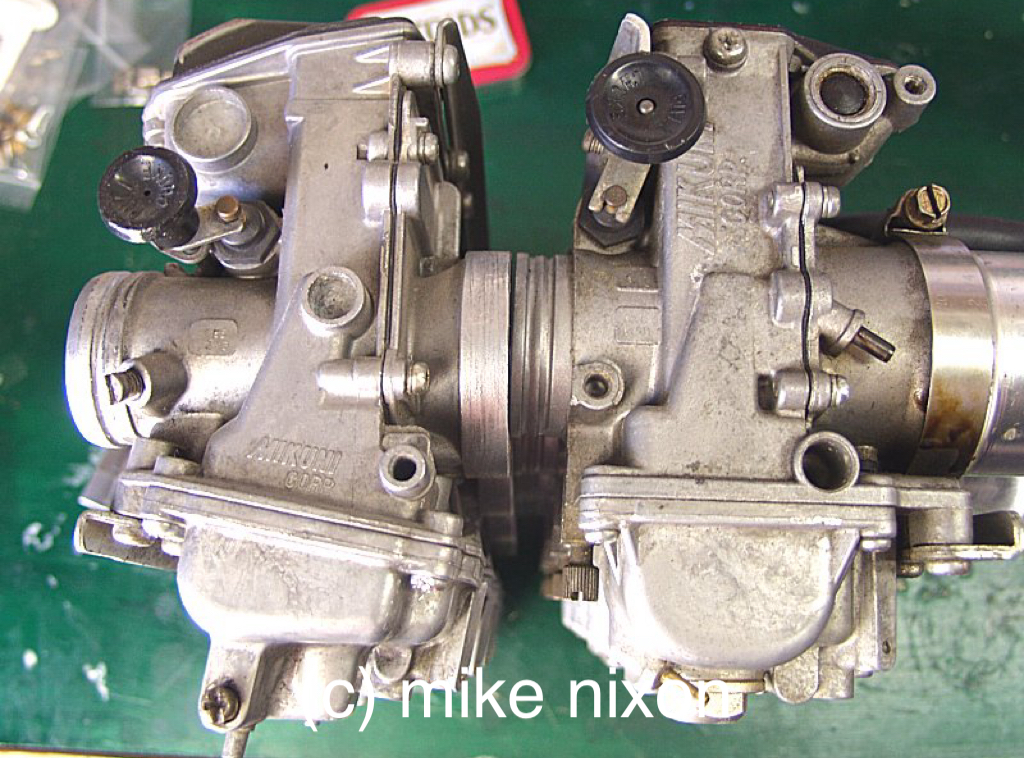
Note the differences between the factory Suzuki VM29SS carb on the left and the non-proprietary RS carb on the right. Both are Mikuni, both are flat slide. But every part is different. |
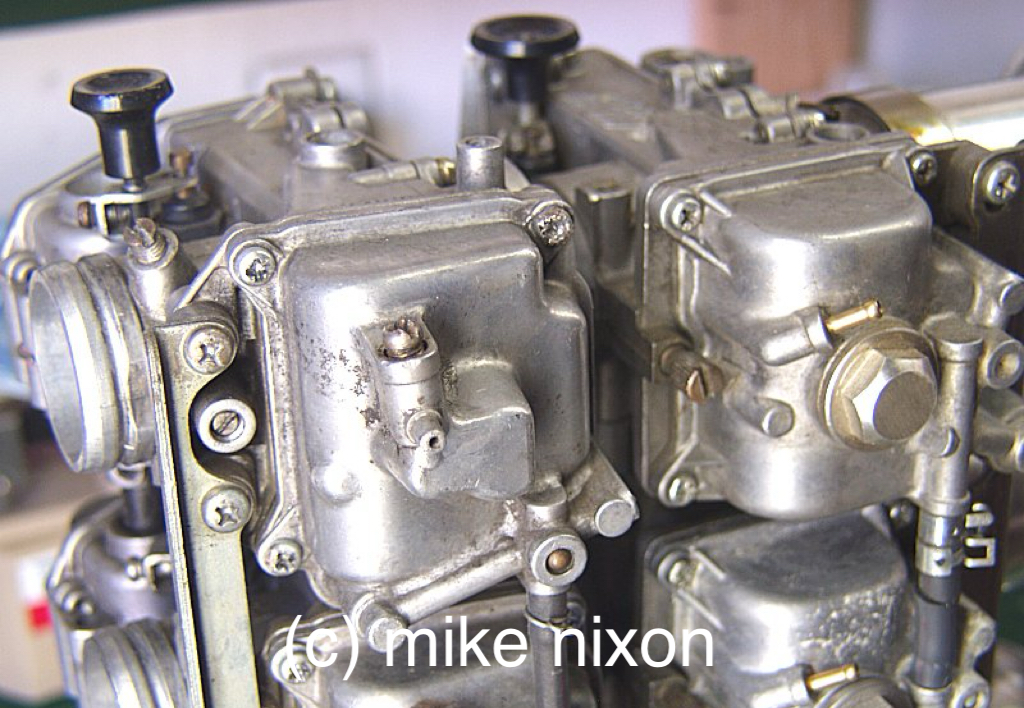
More differences. Although both the VM29SS and the RS emply piston-type accelerator pumps, they are configured and mounted very differently. In short, nothing is interchangeable on these two types of carburetors. |
|
|
|
|
|
Last updated March 2026 Email me www.motorcycleproject.com My bio © 1996-2026 Mike Nixon |