  ® ®
|
The enjoyable but also sad rescue of a much neglected 1972 Honda CB750 |
|
This was a months-long project. This picture journal was created because my customer had had a lot of mechanics work on the bike and I wanted him to have the detail that communicated the issues. Some of these entries may seem confrontational. They are not. If any shame is meant, it is on the "mechanics" who worked on this machine on the past. |

|

|

|

|
|
This first handful of images is about the many years and many miles of use my customer had got from the bike. He crashed it at speed on the roads of Italy, for example. A lot of engine and frame damage resulted.
|
More.
|
More.
|
These steering stops are what a mechanic looks for. Heavily damaged, both sides, and one of them evidences an attempt at weld repair.
|

|

|

|

|
|
The frame is bent. The first sign is how the orignal exhaust mounting is modified. One side has a stack of washers.
|
Also as a consequence, the frame downtubes had to be spread apart to get the engine out and back in again.
|
The rearmost bottom engine mount bolt doubles as the footpeg mounting. Both ends of this bolt were badly bent. The bolt was replaced.
|
Rough handling, wouldn't you say? There was a lot more than this. Nearly every engine fastener had pulled threads.
|

|

|

|

|
|
This gasket surface represents pretty much all of the engine's surfaces.
|
A cracked engine mount boss, from the use of incorrect bolts.
|
A poorly maintained drive chain has begun wearing a groove into the engine cases.
|
There was a pretty significant oil leak at the front of the engine.
|

|

|

|

|
|
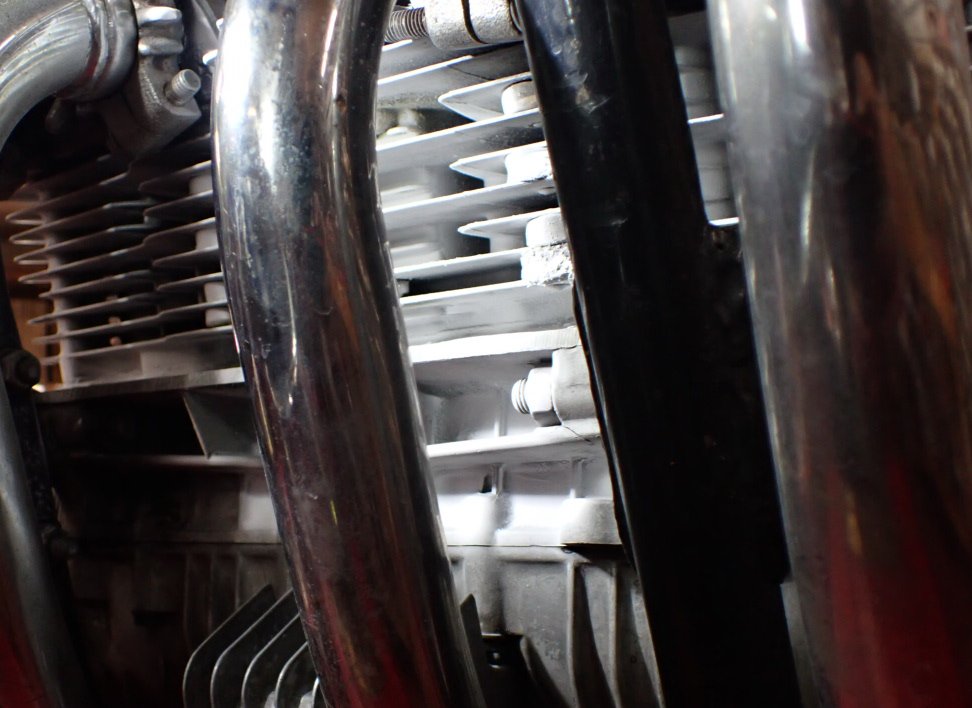
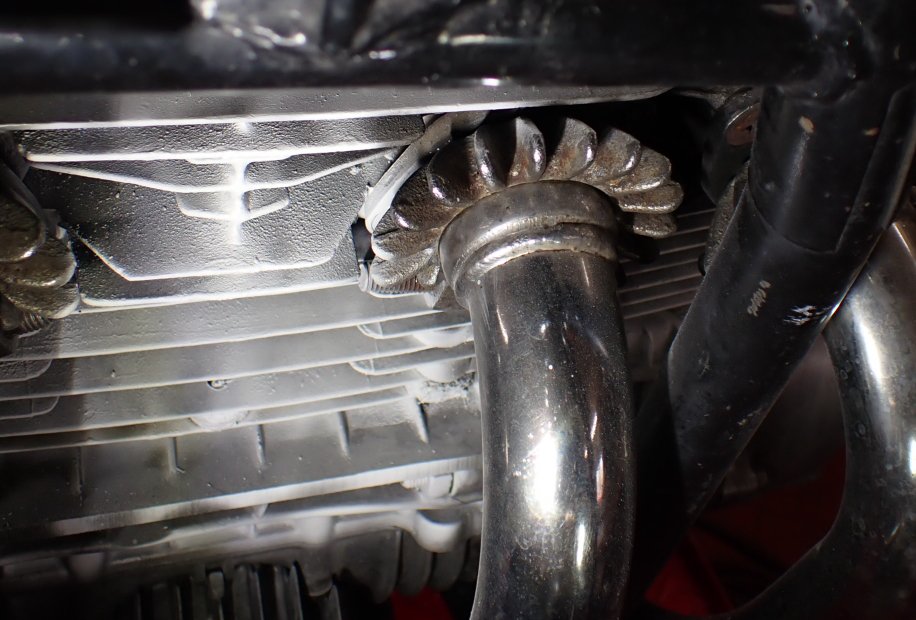
The correct way to diagnose this is to powder the engine all over.
|
Ditto.
|
Ditto. See the base gasket leak? There is a reason for this.
|
The oil leak at the front of the engine was caused by this, a heavily leaking head gasket.
|

|

|

|

|
|
Another shot.
|
Check out the gasket. No sealer on it.
|
The head itself also bears out the nature of the leak.
|
So the engine was run a bit to get it hot, aersol Gunk sprayed on, then after it was hosed down.
|
|
|

|

|
|
See the powder? It's athlete's foot powder, the traditional industry method.
|
More.
|
Wow. Really?
|
And this is classic. The front axle clamps are put on wrong.
|

|

|

|

|
|
While the engine was apart, measurements were made. The cylinders are a touch looser fit to the pistons than I prefer, but not too bad. And they are straight and round, which is good!
|
At a bit over 0.002", looser than optimum, as I say. But alright.
|
One of the cylinder base o-rings was loose.
|
Granted, a lot of years use are represented here, but that is a lot of blowby, more than it would have been with a better piston fit.
|

|

|

|

|
|
Incredibly, the valve springs are installed upside-down. All of them, indicating deliberate choice.
|
Akk! Silicone sealer! The bane of every conscientious mechanic.
|
See anything wrong here? There is no good reason for this Dyna ignition's backing plate to be installed fully counterclockwise. Something is wrong here.
|
Hah! The plot thickens! This 750 has a 350 four ignition advancer. As a result, the ignition timing was grossly retarded. One more reason for poor running and more corrective steps to be taken.
|

|

|

|

|
|
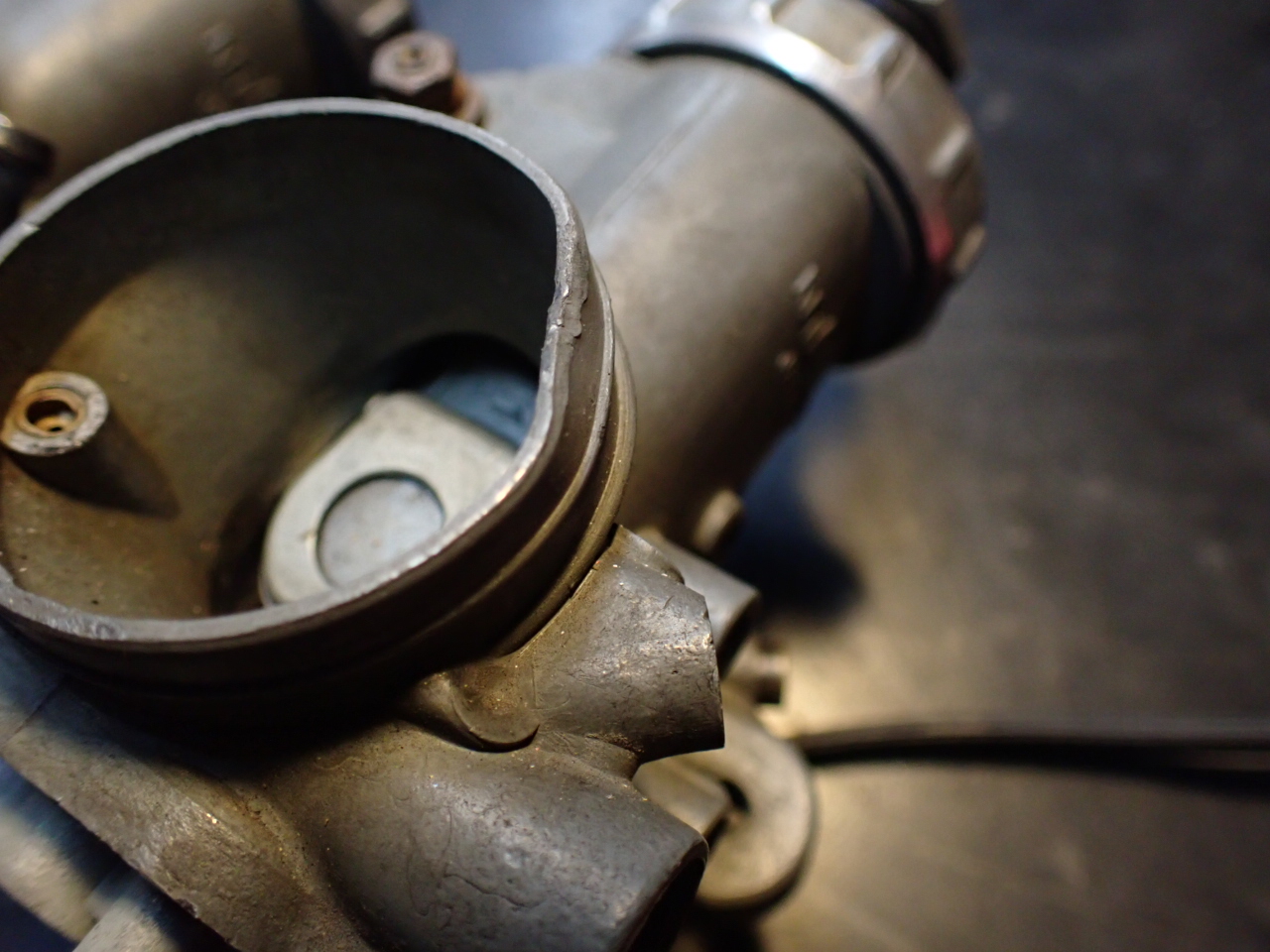
I often see these hammer marks on 70s SOHC four carburetors. It means someone didn't know how to disassemble them.
|
One of the four carburetor float valve seats was different from the other three and was missing its fuel screen.
|
No. It may be popular on racing circles but this is bad news on a road-going motorcycle.
|
The carburetor slides slow evidence of drills or wire or something being stuck under them. This is a hack procedure.
|

|
|

|

|
|
The carbs' jetting was inexplicably way richened up. And the wrong type jets were in the carbs.
|
The damage visible in this picture doesn't tell the whole story. In fact, these carbs were phyically worn out internally.
|
Remember the hammer marked throttle shaft? This treatment broke the locating pin in the linkage, allowing the parts to slide back and forth. This made the carbs dangerous, as the throttles could very easily stick wide open. See my video on this subject.
|
Part of that uber-rich carb setting. No excuse for this. Nothing in the engine warranted it.
|

|
|
In the end, the running part of the bike became as good as it gets, though there were still issues with the wiring and the chassis, at a minimum. When test ridden it was definitely a keeper. You will note the use of 77/78 carbs. Neither the original carbs nor any replacements could be used due to wear. The later carbs are actually improvements too, as veteran mechanics know. |
|
Last updated June 2026 Email me www.motorcycleproject.com My bio © 1996-2026 Mike Nixon |